EC Emerging Contaminants Monitoring Database Research data portal
Global research data portal

Emerging Contaminants Monitoring Database

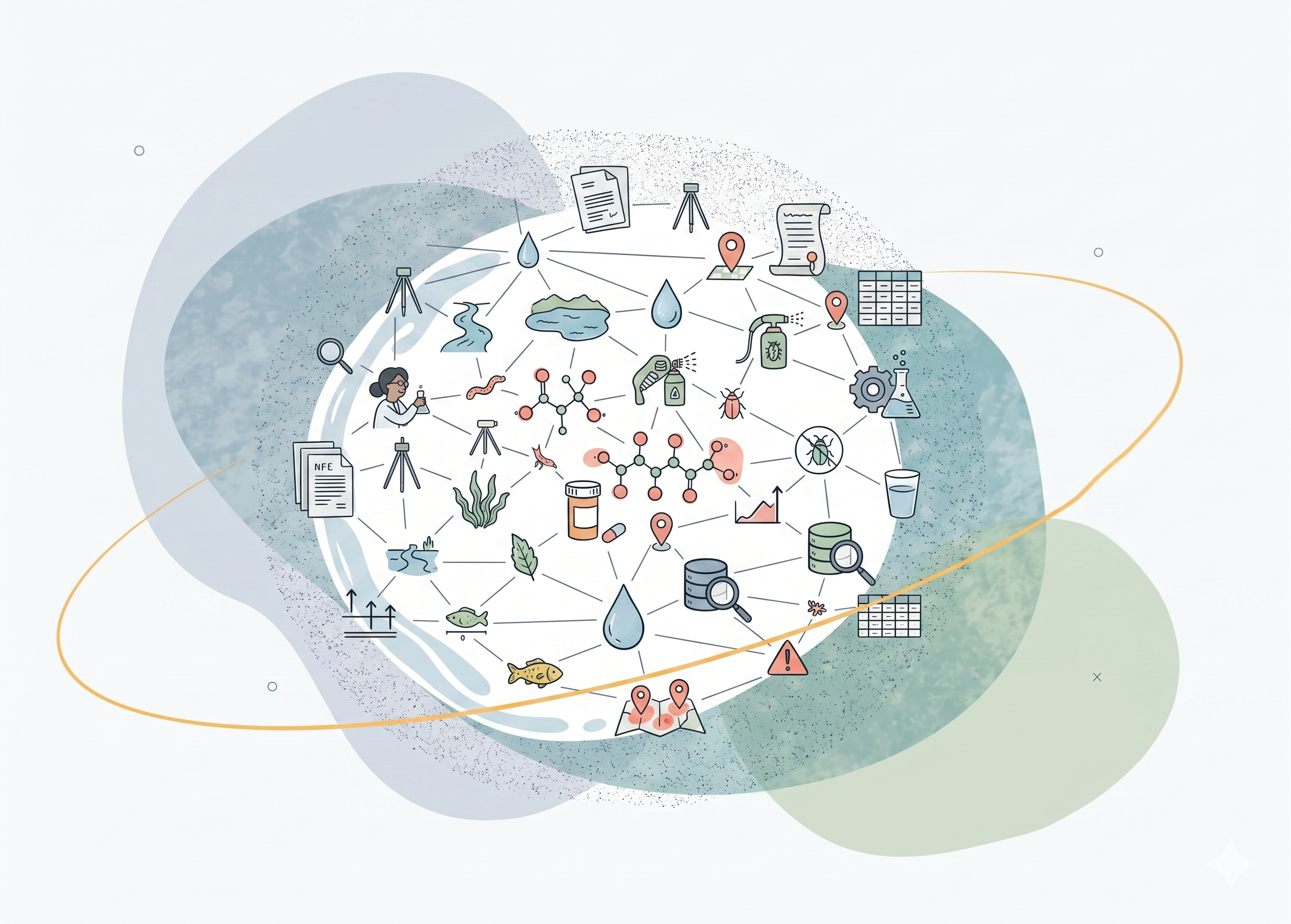
This platform integrates site-resolved monitoring records, contaminant coverage, and reference-linked evidence, supporting comparison of spatial patterns, screening of monitored matrices and analytes, and identification of geographic and temporal data gaps.

Structured around sites, contaminants, references, and record-level observations.
Records ...
Sites ...
Contaminants ...
References ...
Portal scope

Site-resolved monitoring evidence

  • Track contaminants across locations, matrices, and monitoring campaigns.
  • Inspect linked references together with summarized record counts.
  • Filter by contaminant, country / region, matrix, and sampling period.
Daily Ingestion Log

Latest Update

Daily literature ingestion keeps only verified water-environment measured concentrations and reports newly added records for each imported paper.

Water only Measured concentrations Up to 5 papers / day
Latest run

Update summary

Status

No update runs yet

0

The latest ingestion summary will appear here after a successful run.

Imported papers

Recent additions

The newest verified imports appear here together with the number of newly added records.

No literature additions are displayed yet.

Query interface

Filter and explore the database

Refine the dataset by contaminant, country / region, matrix, and sampling period, then move between geospatial, site, and evidence views.

Use the geospatial explorer to navigate clustered monitoring locations, compare site-level coverage, and trace the supporting literature for each record set.

Analytical Summaries

These summaries respond to the active filters and provide a concise overview of spatial and contaminant coverage.

Site Overview

Sites are displayed 20 at a time. Country / region is used as the primary heading, while local site identifiers remain supporting context.

Contaminant Overview

Contaminants are displayed 20 per page to support compact browsing across monitored analytes and categories.

References

Reference cards are displayed 20 per page to support manageable browsing across the linked evidence base.